
Tiny Canons
Sheep’s Farts, Spores and Sniper Mushrooms

One of life’s great joys is walking through a grass field. The softness beneath your feet and vibing with the fresh air, it’s a practice that’s been proven to reduce stress, anxiety and calm your nervous system.
Maybe it’s some deep-rooted cave-person instinct, but few things feel more grounding than wandering through a field. I’ve never dared go fully barefoot, mostly because my feet are permanent ice-blocks, a perfect model of homeostasis for something that’s about to keel.
Still, I’ve always loved that science actually backs it up that grass is good for us. Who knew photosynthesis can double up as a therapist?
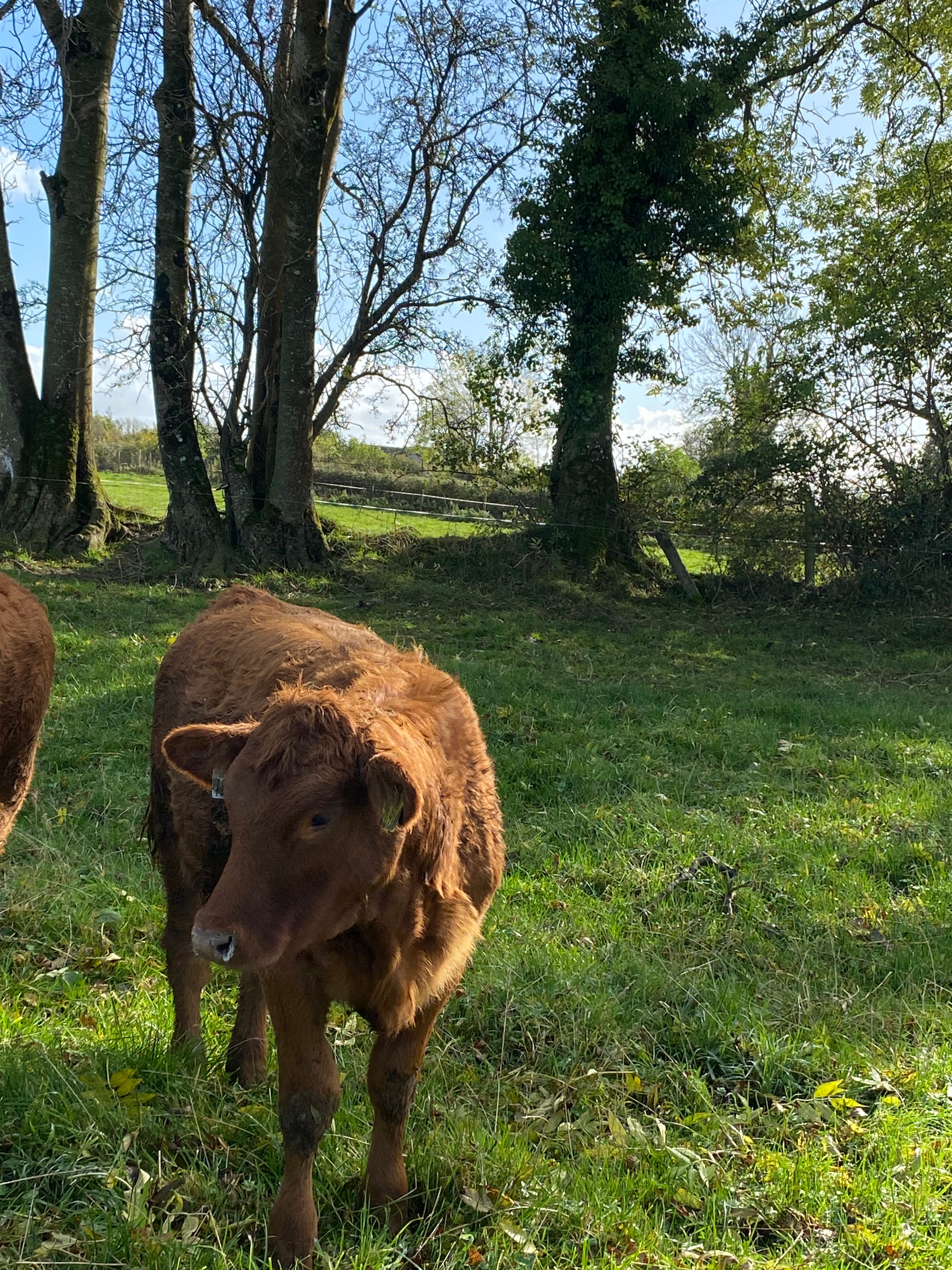
Now, I’m all for the idea of traipsing through a field barefoot, but there’s always that tiny voice in your head whispering, “What if you step in something that isn’t grass?” Especially if animals have been around.
It got me wondering, how long does it take for the things we definitely don’t want to step in to break down? And how does that even happen?
This time of year, fungi are everywhere, and one of the most identifiable are the little white puffball mushrooms, what I grew up calling sheep’s farts. Lately, I’ve been reading about something far more spectacular: pilobolus crystallinus, a fungus that shoots its spores like a microscopic cannon. It’s also known as hat-throwers and dung-cannons.
Pilobolus digests nutrients in dung, mostly from herbivores, because that’s where its spores have the best chance of traveling to new pastures. They really can travel, as these spores are sticky little missiles that latch onto the fur of grazing animals.
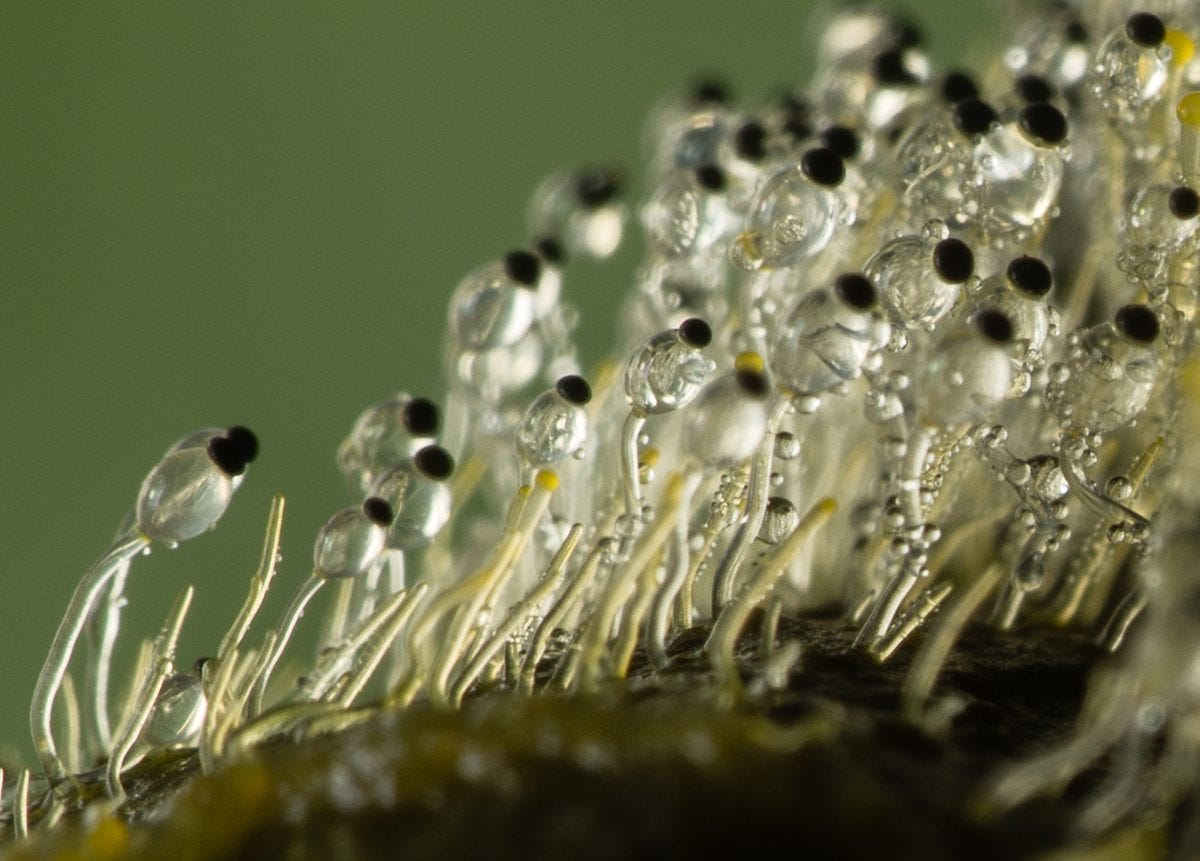
Pilobolus builds a pressurized sporangium, which is a tiny capsule packed with spores on a flexible stalk. When the pressure is just right, the sporangium explodes, shooting spores up to two metres away (or 6.5 feet if you prefer imperial like me). Its rate of acceleration exceeds that of a bullet shot from an AK-47 rifle.
This dramatic launch ensures the spores don’t just land back in the dung, they hitch a ride on passing animals in order to colonise fresh grass. It’s dispersal is like a fungal space shuttle, blasting off to new worlds.
Even more amazingly, pilobolus can aim its spore cannon. Using a tiny light-sensitive patch, it angles itself toward open space, like a sniper lining up the perfect shot. Other fungi just grow, pilobolus is taking flight, literally.
So next time you wander through a grassy field that’s been grazed upon, take a moment to imagine all the microscopic missiles zipping through the air, helping break down dung so your barefoot meditation isn’t interrupted.
Thank goodness for fungi.
Another Hit! 👏