Raising Railways
How I fell for trains and why Europe should too

Last weekend I visited my lovely friend Tess in Bournemouth and was reminded just how much I love to travel. I absolutely adore the weightless feeling of it, having everything in a backpack and being engulfed by the new sights, smells and adventures that new cities promise.
I had a blast. Tess brought me to the seaside like I was a Victorian Londoner recovering from consumption, like we were Jo and Beth in Little Women. We visited the Russell Coates museum (would recommend) and also consumed many delicious pints. But this blog idea came from the journey there, on how I got to Bournemouth on a rainy, atmospheric Friday afternoon.
I’ve written here before about my love of trains and travelling by rail. If I can, I will always choose the train. Part of the appeal is the freedom, if you want to stretch your legs or move seats, you can.
I also love to read, and it’s one of the only forms of travel where I can do that without feeling queasy.
It’s also the soothing sounds of the train, the stability of it, the symmetry of the tracks, the vastness of the machinery itself. Dare I say no cup of tea tastes better than the one prepared from the little cart.
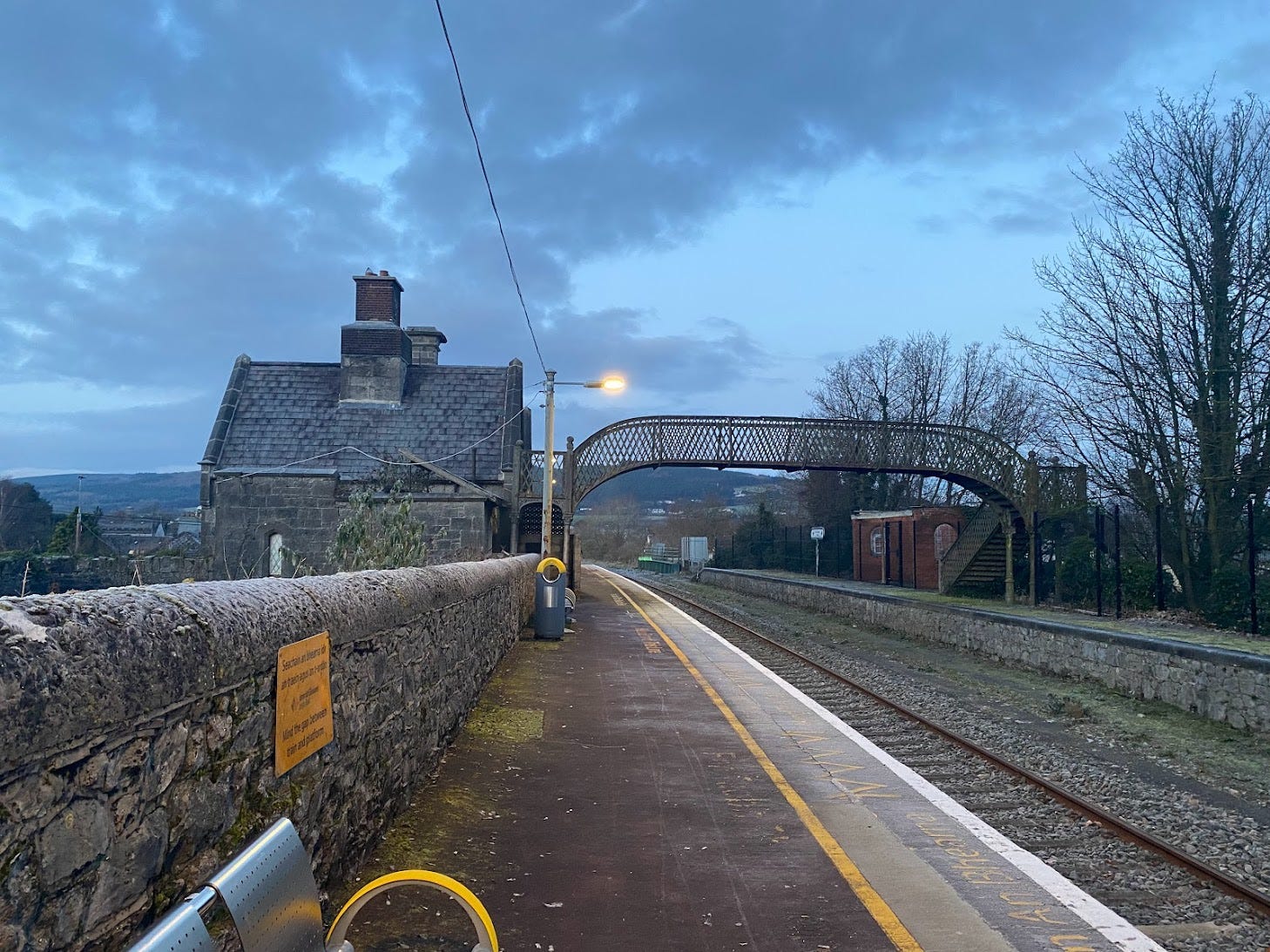
There’s also something deeply romantic about train platforms and stations, perhaps the result of a lifetime spent watching Merchant Ivory adaptations, or seeing Brief Encounter at a formative age.
I’ve seen a lot of people say that the best part of adulthood is giving yourself permission to love the things you adored as a child. I seem to have done exactly that as among my friends, I wear the little badge of traintisim with pride.
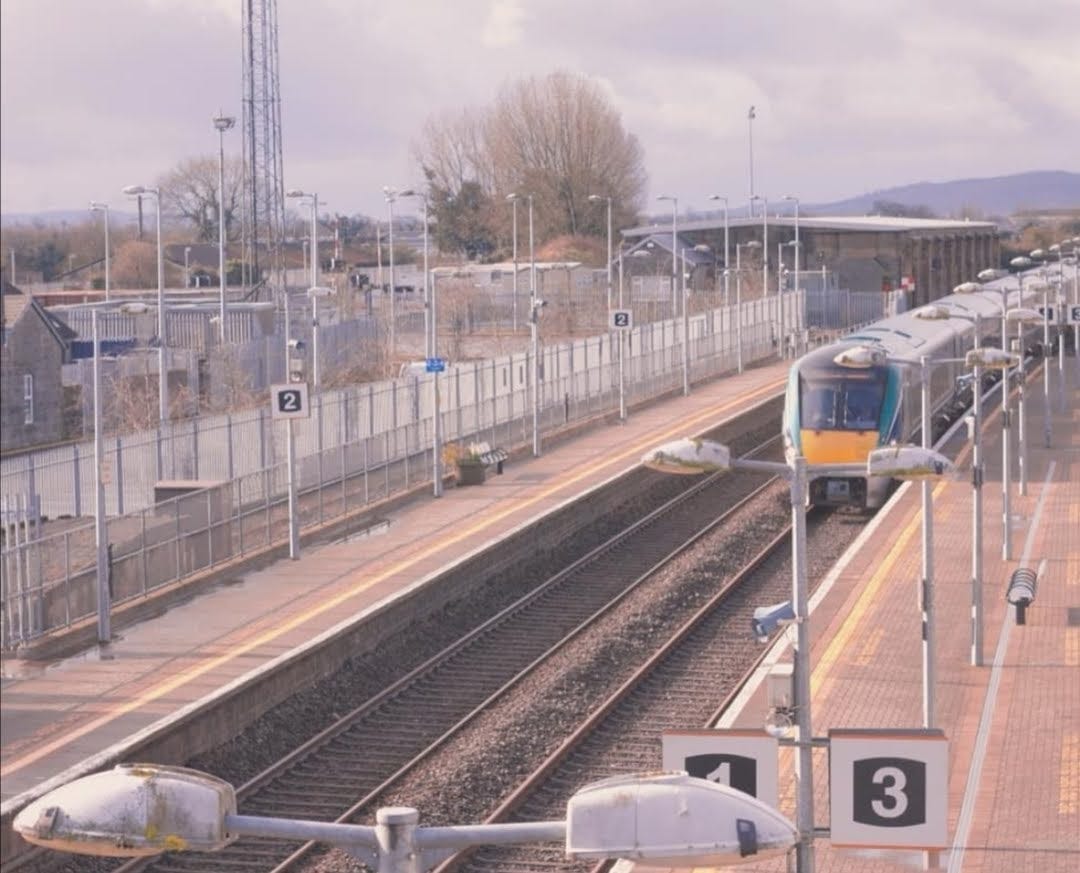
I think it started with my very first memory, sitting on my dad’s shoulders, gripping his grey-white hair as we looked out at a crash on the Cahir viaduct. For years I assumed I’d invented it, some strange childhood dream, until I looked it up this year and discovered it really did happen. In October 2003, twelve Irish Cement wagons plunged into the river.
There are plenty of other reasons, of course, but that early moment seems to have sparked something in me.
My lifelong dream has been to travel the world by rail. I even chose Sweden for Erasmus largely because I wanted to try Stockholm’s network, and I’ve seen more of the planet through Michael Portillo’s journeys than through my own. I’ve crept along the tracks in books with Ponyboy and Johnny as they made their break for freedom.
I’ve stood hungover in Limerick Junction with all the tragic energy of Anna Karenina, giggled hysterically in the Berlin Unterwelten and pretended not to be tipsy in the Swedish Pendeltåg.
However, while I did spend some time in Waterloo Station to catch the train to Bournemouth on my recent trip, a crucial element of my journey was, unfortunately, a flight.
I felt slightly sacrilegious about it. I’d decided that, where possible, I would slow-travel for personal trips from now on. But with a topsy-turvy schedule (hello PhD life) I had to book late, and the result was sky-high train and ferry prices.
I’m also particularly poor at co-ordination, I’ve booked the wrong dates multiple times, so I felt overwhelmed at the prospect of aligning everything and abandoned the notion for a quick check on Skyskanner.
I’m not even a huge fan of flying. There’s so much waiting around, I’m inevitably the one pulled aside for a random security check (clearly my aura is suspicious), and once you’ve seen one duty-free, you’ve seen them all. I mostly associate flying with feeling restless and hearing the narrator from Seconds From Disaster start up in my head the moment the plane starts to taxi.
Then there’s the heavy weight of feeling like a climate criminal for indulging in such a carbon-intensive activity. While I’m not Taylor Swift hopping on an eight-minute private jet, but I’m still in the top most privileged fraction of humanity, quite literally flying in the face of the climate crisis.
The thing is, our infrastructure makes the ethical choice harder than it should be. I think a lot of people would happily substitute a flight for sail-rail. I did it earlier this year and loved it, from breakfast on the ferry, seeing the stations in Holyhead and Chester, the English landscape and Irish Sea rolling by and, crucially, a delicious Ploughman’s sandwich en-route.
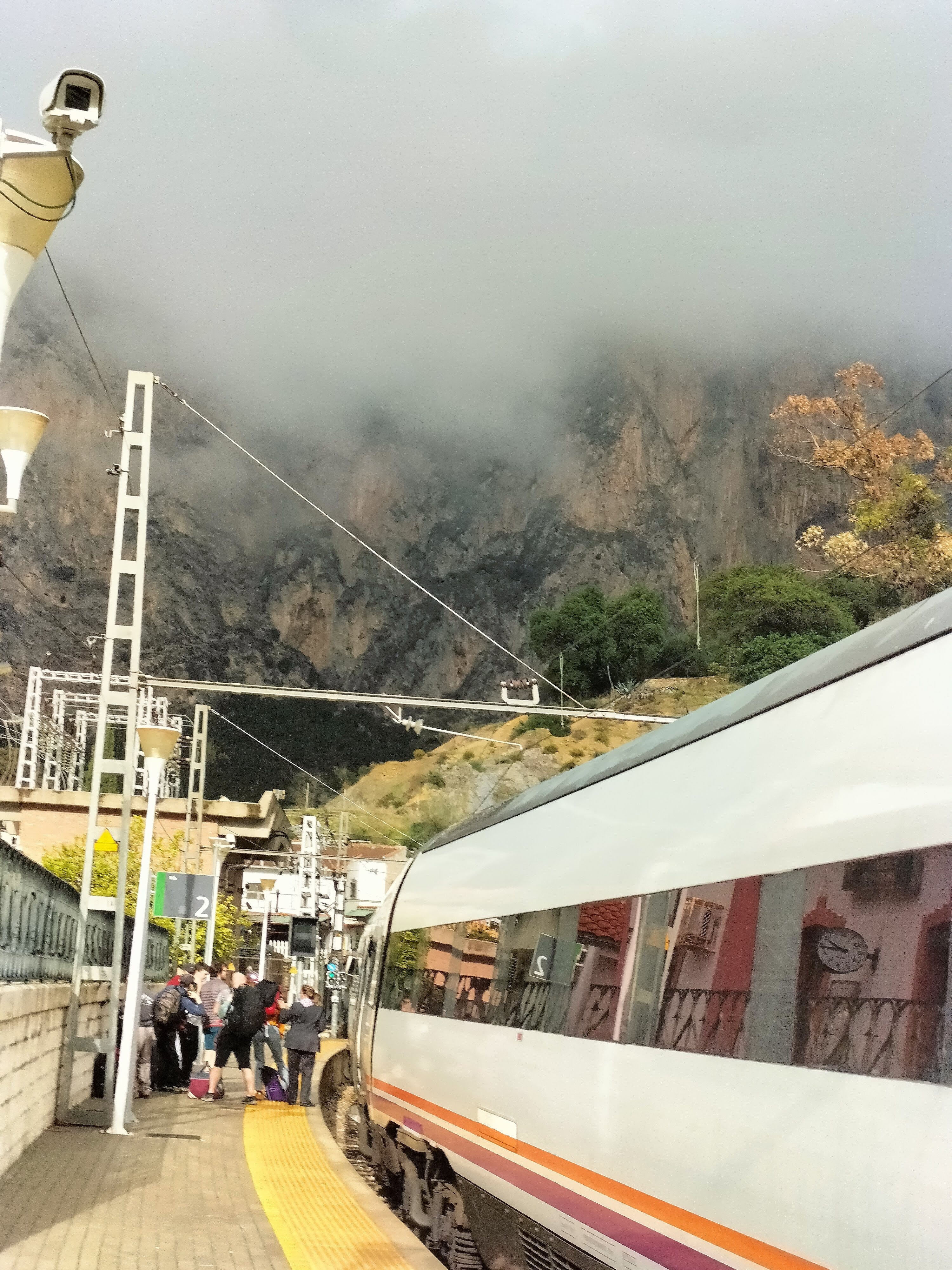
From an environmentalist’s perspective, there are so many reasons to be excited about trains when it comes to carbon mitigation. Rail plays a critical role in the EU’s green transition toward a more sustainable transport system, improving economic efficiency, advancing climate targets and enhancing mobility equity between member states.
Rail consumes six times less energy than road transport, and it also helps mitigate supply-chain disruptions as inland waterways dry up due to global warming.
Earlier this year, I wrote a transition-theory white paper for college about what the EU could do to improve its rail network. The first step was to acknowledging the current problems.
One of the biggest issues facing the EU’s rail system is fragmentation. Each country has its own signalling systems, technical standards, and operational rules. While the Common Transport Policy aims to harmonise European transport, implementation of the European Rail Traffic Management System has been slow.
National railway companies also tend to prioritise domestic services over cross-border routes, leading to longer journey times for international travellers that make flying look a lot more attractive.
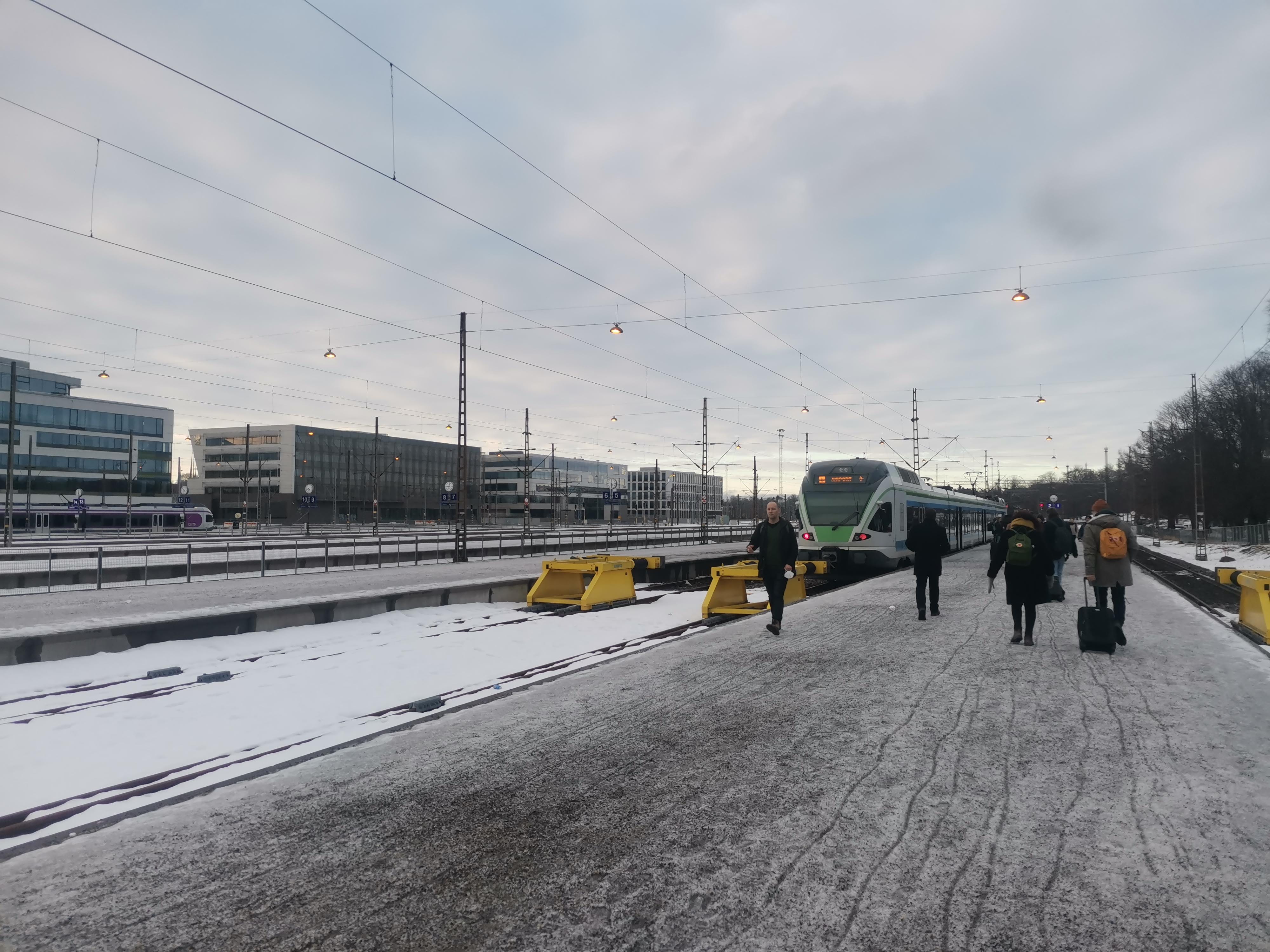
Another challenge is that high-speed rail is concentrated in Western Europe, leaving major gaps in Central and Eastern regions due to poor coordination and sluggish development.
Rail also struggles to compete with aviation: on average, it is 71% more expensive than flying. Airlines benefit from generous exemptions, like the kerosene tax exemption, which allows them to offer artificially cheap fares. It’s part of what landed me in Shannon airpot to get to the UK rather than on a ferry from Dublin Port.
Another issue is speed. Only 51 of the EU’s 150 busiest short-haul flights have train alternatives of under six hours.
The rise of neoliberalism has also encouraged individualism in transport choices, driving car-ownership growth while undermining investment in public transit. It always stikes me how Ireland constantly priorities car use for the individual, when we have yet to have adequate services for the majority in the form of public transport. Rail freight too has declined for decades due to administrative and infrastructure barriers, leaving roads and aviation to dominate.
But fellow train-lovers, do not lose hope, there are solutions!
Carbon pricing in the form of an emitter fee would make rail more competitive by rewarding its low greenhouse-gas emissions compared to aviation. We know this works, as France successfully shifted consumer choices by incentivising low-emission cars and penalising high-emission ones.
Carbon pricing isn’t about raising prices across the board, instead it’s about recognising the significant environmental costs of certain choices. Right now, aviation remains artificially cheap despite its outsized impact on carbon emissions.
Modest restrictions on short-haul flights have also shown results. France’s ban on domestic flights where a high-speed rail alternative exists has led more passengers to choose rail.
Investment in renewable energy, supported by the EU’s Connecting Europe Facility, would also improve rail’s sustainability by expanding viable electrification.
And of course, the expansion of high-speed rail is essential for making trains competitive with short-haul flights. At the moment, the EU has spent only €3.4 billion of the €54 billion needed to complete eight major cross-border transport projects. Sail-rail no longer has to be snail-rail (I need to patent that).
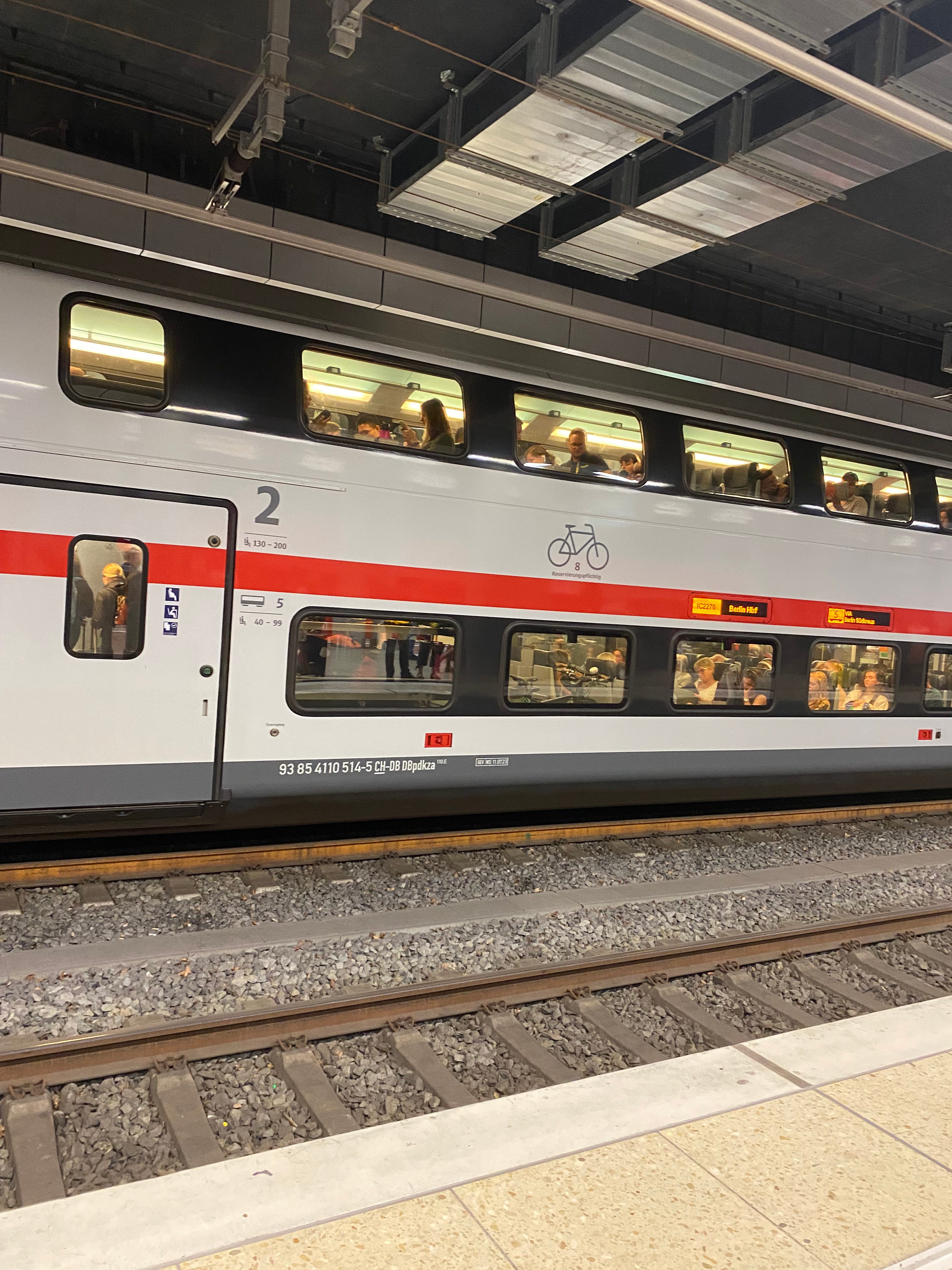
Standardising systems and integrating rail across the EU would vastly improve its appeal, especially when paired with multimodal hubs that make train travel feel like a reliable, cost-effective alternative.
One of the most significant changes needed is eliminating the unfair advantages afforded to air transport. Ending the kerosene tax exemption and imposing levies on budget flights would level the playing field. A frequent-flyer tax could also encourage more travellers to shift to rail.
Despite living on an island, I know the future of exploring Europe and beyond can be done by train. I’ve watched enough Michael Portillo in his bright trousers to believe in that.
The question that remains is whether our legislators will have the imagination to build a system that makes the slower, kinder choice the easier one. Our systems should be making the appeal of the train apparent to everyone.
It would acknowledge what most of us suffering from traintisim already know, that the slow route is not just gentler on the planet, but richer for us, too.
I’ll forever love the train, and I hope our leaders share my enthusiasm for the future of rail in Europe. Until then, I’ll keep choosing the train fueled by a love of the planet, the beauty of the infrastructure and the Ploughman’s sandwiches, completely caught up in the romance of it all.