
Nuclear Notebook
What a freebie from a farming conference says about who controls the land

I was back in Tipperary the other day, and my older brother had just returned from a tillage conference. He came home with one of those goody bags they give out to farmers attending and, naturally, I went rifling through it. (If you’re reading this, Michael, I’m sorry.)
I found amongst the goods a small, dinky notebook.
Only afterwards did I realise it was sponsored by a company selling herbicides. At the back of the notebook was a graph that genuinely frightened me.
Cow parsley, brambles and docks were just some of the plants listed as “weeds,” alongside prescribed herbicides intended to treat them.
On this spreadsheet, they are reduced to a traffic-light system measuring how efficiently each sponsored chemical can kill them. In reality, they are ecological infrastructure.
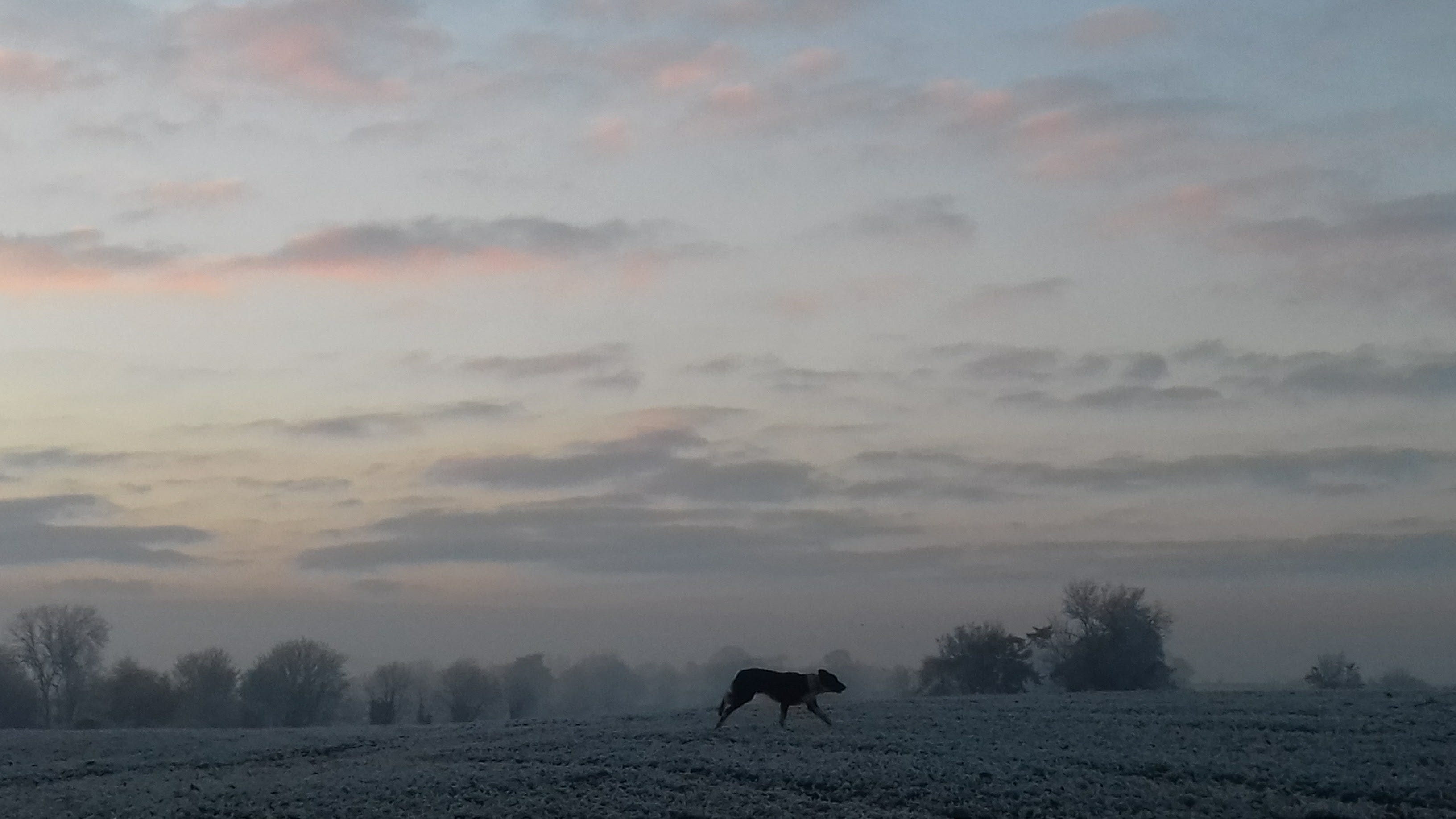
Cow parsley flowers early, feeding hoverflies, beetles and solitary bees at a point in the year when little else is available.
Dock leaves have deep taproots that draw nutrients up from compacted soils, improving soil structure and fertility. Their broad leaves retain moisture, provide shelter for invertebrates, and support moth and beetle larvae that underpin wider food webs.
Brambles, so often dismissed as nuisance, are among the most valuable plants in the landscape. Their dense growth offers nesting and refuge for birds and small mammals, while their long flowering period provides nectar and pollen for bees and butterflies well into late summer. Their berries feed birds and mammals in autumn, dispersing seed and sustaining wildlife when other food sources decline.
What is framed as a problem to be eradicated is, in fact, a functioning system performing vital ecological tasks without which our ecosystems unravel. Remove them and you don’t just “clean up” a field, you dismantle the system that agriculture itself depends on.
I’m not arguing for purity, but what we now call “management” increasingly looks like total eradication. Verges, hedges and margins must be cleared and sprayed. Life must be justified economically or else face eradication.
This is the result of long-term structural influence. Chemical agriculture has embedded itself across advisory systems, co-operatives and industry events, shaping a narrative in which chemical dependence is framed as necessity rather than choice.
The presence of industry lobbying at educational events is treated as benign, even helpful, while other models are framed as fringe or idealistic.
When I interview organic farmers, many describe a sense of isolation during the transition to organic practices. Stepping outside the chemical model often requires courage, but courage alone does not pay the bills.
When the system does not provide infrastructure, markets or agronomic support for alternatives, “choice” becomes an illusion. You’re not choosing between methods, you’re choosing whether or not to jump without a net.
The groundswell of desire to change is there; it simply requires a system capable of supporting it.
This was proven during the term of the last government, as several supports and schemes for organic farming were introduced driven by the work of the Green Party. In Budget 2023, the Organic Farming Scheme received an allocation of €37 million, representing an 80% increase on the previous year and the highest level of funding for the scheme at that time.
More recently under the Lowry coalition, funding levels have dropped. In Budget 2026, €58.6 million was allocated to the Organic Farming Scheme, representing a 12.5% reduction compared to Budget 2025.
Ecosystems are the collateral damage in this. They don’t inspire sympathy as the likes of the wasp, the horsefly, and the beetle aren’t easy to market.
Yet they pollinate crops, recycle nutrients, and hold entire food systems together, work worth billions to the economy.
This raises an uncomfortable question: who really benefits from the current system? Certainly not the farmer, locked into rising input costs and shrinking margins. Certainly not the insects. Definitely not the ecosystems that sustain us.
What we have granted instead is the power for chemical companies to determine which forms of life are acceptable and which are expendable.
That authority sat in a red goody bag, alongside a torch and a wallet: a small notebook advertising ecological erasure.
Insect populations are collapsing at a terrifying pace. This isn’t a side issue; it’s the unravelling of the foundation of our food system. If agriculture is to have a future, it cannot be built on permanent chemical dependence.
We need policy, co-operatives, and advisory systems that actively support farming with nature rather than against it.
Not as a niche, but as a viable, supported norm.
With the climate we have, there is no justification for Ireland remaining locked into a chemical farming model. Leading in organics and diversification would improve food security and give us a real chance of saving the natural world we depend on.
One of the biggest arguments against adopting organics I hear is market demand, but the same system that built demand for chemical-intensive farming can just as deliberately cultivate a demand for organics.
Demand is shaped by policy, pricing, public procurement and political will, all of which are already used to support conventional agriculture.
The last government’s term demonstrated that political will, when applied consistently, can overcome structural inertia.
We are significantly off track for achieving our climate targets, and repeatedly extending the nitrates derogation without delivering real, long-term solutions is a missed opportunity, one that comes at the expense of public health and environmental integrity.
At some point, the question will no longer be whether we can afford to change, but whether we left ourselves anything to save.
What will we write in our notebooks then?
Such an important topic. At a purely economic level, aphids, wasps, hoverflies and ladybirds contribute, for free, to aphid control in cereal crops. But these insects need unsprayed habitats, including healthy hedgerows, to survive.
PS: Lovely photos