
Finding Ground
The story of how I went from being a journalist to a geography researcher

Recently, someone asked me what I would say about returning to study something in the environmental field. I produced a flurry of half-thoughts and promptly forgot every coherent idea I’ve ever had.
So here is the version I should have given: a semi-scholarly, semi-chaotic account of my own return to study.
I offer it in the hope that it might offer a little clarity and reassurance to anyone considering taking a similar leap.
Over the past few months, I’ve been settling into my PhD, I’ve found myself reflecting on the unusual (and occasionally chaotic) path that brought me back to higher education to study environmentalism.
“Settled in” might be a generous phrase, it’s more that I’ve accepted my new identity as someone who is hooked on caffeine and saying “I’ll catch up next week.”
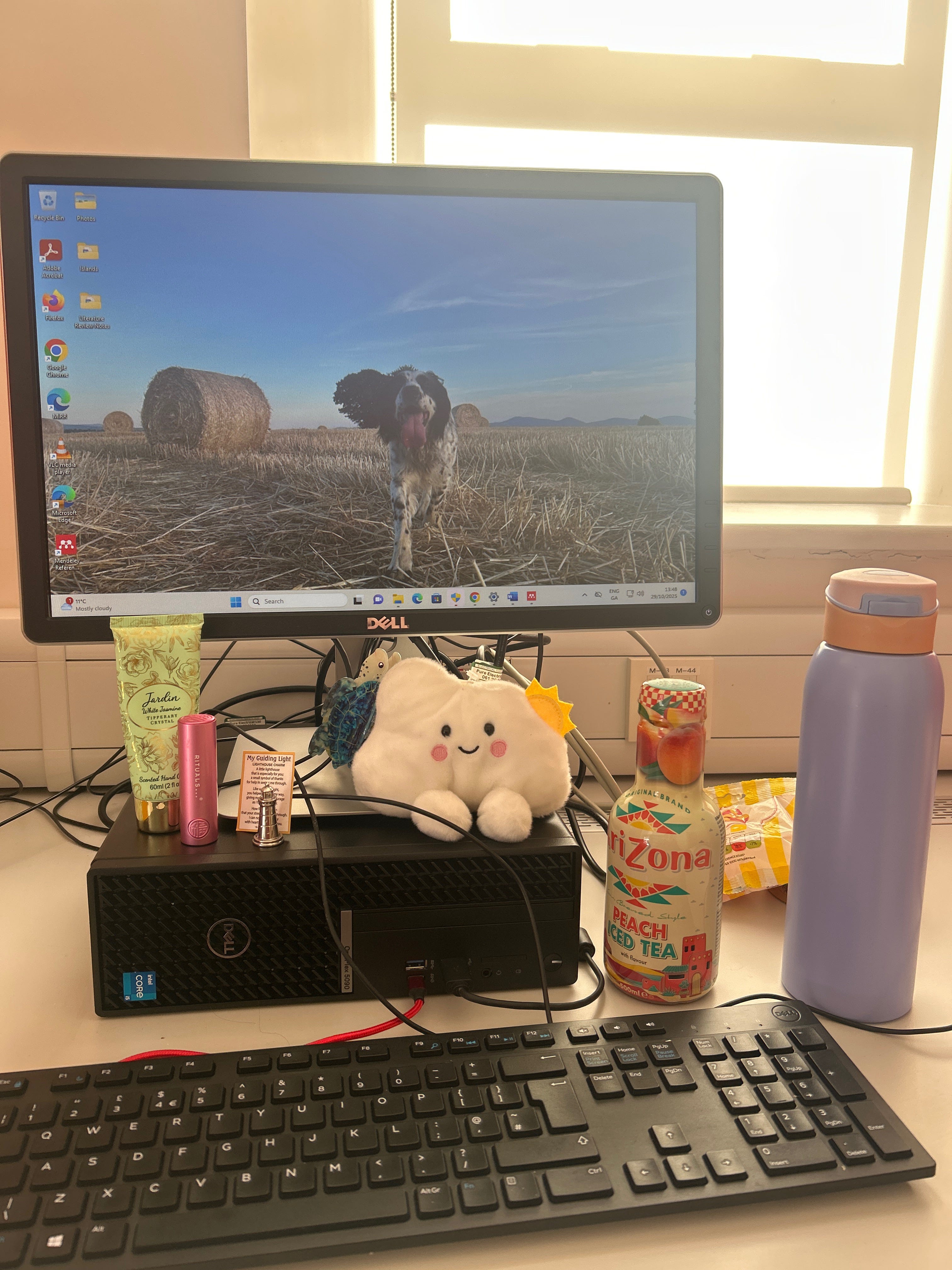
I keep waiting for someone to tell me they are messing, take back the funding, and have nearly weekly stress dreams about my leaving cert.
Weirdly, the dream always goes like this: I’m crammed into the sports hall of my old school, sitting my geography exam and I don’t have a pen. I try to get the invigilator’s attention, but nobody notices. Panic spreads and I’m spiralling.
Then I wake up, heart hammering, and remember that I’m 24 and my Leaving Cert was six years ago.
Initial anxiety aside, the transition has given me space to think about how I arrived here at all.
I want to acknowledge from the outset that I am very fortunate to have access to third-level education. I don’t take that lightly. While universities are not the only places where knowledge is created (interviewees have taught me far more than any lecture on several occasions), they remain invaluable for structured learning, academic community and the chance to spend a frankly unreasonable amount of time thinking about one niche topic.
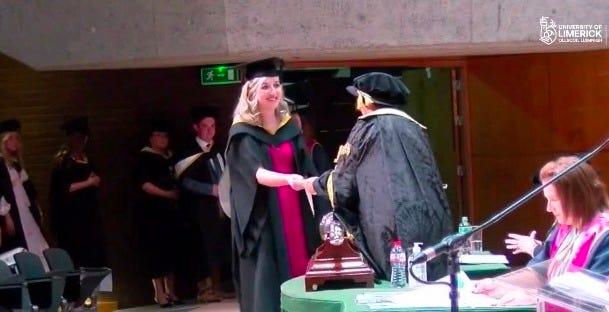
My academic background is in journalism, which I studied at the University of Limerick. I chose it using a highly scientific method consisting of vibes and a general conviction that writing was something I loved.
I also had a portfolio graded for art college, so choosing what to do tore my heart in two. In the end, journalism won, probably because I can cope with red pen over words, but not with someone asking, “and what were you trying to do here?” in relation to my art.
Like many students, I struggled with the sudden lack of structure at university. Without timetabled days, I unravelled slightly.
I could cook for myself (pesto pasta) and I (sort of) understood my limits on a night out, but give me an open afternoon and I would crumble into smithereens.
The seemingly formless, wide open days were horrifying to me. I yearned for structure, partially because I like to get lost in things. I found the amount of self-reflection I had to do during this time almost unbearable.
I also realised how practically-minded I can be. This is a LinkedIn-friendly way of saying I hated sociology. I nearly dropped out the moment I first heard the word “McDonaldization.” (Honourable mentions: epistemic, media conglomerates, mediatization…)
But then came one of the first turning points in the form of a feature-writing assignment. I wrote about agribusiness and social media, it was published in the Farmers Journal. This was my first glimpse of how journalism intersects with environmental issues, like food systems, land use, agriculture. A small seed was planted in the back of my mind.
My connection to environmental storytelling deepened once I began writing for my local paper. Reporting gave me the structure I lacked elsewhere like deadlines, interviews, cups of tea with strangers.
I absolutely loved my time writing local features around Tipperary. From graveyard restorations to sunflower farms, to spending days with artists as they explained their practice to me, I felt motivated by a feeling of purpose.
One of my favourite memories from this time was working in the day job, dropping Americanos to a table when I saw two of the customers were reading my feature in the paper on how a local business was adapting to the pandemic restrictions.
I felt like I had this glamorous double life: struggling waitress by day, mysterious journalist… also by day. Later that afternoon I dropped a latte on a lady wearing white pants which quickly brought me back to earth.
I discovered that I loved meeting people, hearing their stories, and observing the everyday ways people interact with their environments. I also learned key professional lessons, such as “always accept the tea” and “never assume two neighbouring farmers agree on anything.”
Importantly, I noticed a pattern, that the articles that energised me the most were always environmental, from biodiversity, renewable energy debates, habitat loss, community-led conservation.
I quickly realised that one interview about the environment would lead to five more, which would then spawn three others, and before I knew it, I was juggling calls, emails and impromptu chats with people who actually got excited about organics and hedgerows.
In a bustling newsroom contending with crime, politics, sports and entertainment daily, for me the environment fizzed above the rest.
My first graduate role as a researcher at Live95 strengthened this further. Even though the job wasn’t explicitly environmental, I was given the freedom to produce a weekly sustainability series, Ours to Protect.
The research involved led me down endless rabbit holes of climate policy, renewable energy systems and ecological restoration. I would spend my evenings reading about bogs or marine heatwaves. It became clear that this wasn’t just an interest- it was a direction.
A presentation in Munich about the series expanded my perspective, and soon after, a job in Dublin media followed. But despite my plan to stay there for three years, I felt increasingly restless.
I worked on a breaking-news show, but some stories were impossible to stomach. I can’t deal with stories related to crime, tragedy or cruelty. I couldn’t shake the dread when calling local MPs about shootings in the UK, or the lingering general unease that I wasn’t right for the role.
I found I could produce great scripts on cycle lanes or trains, but I had absolutely no interest in writing about hospitality VAT rates. I’d spend endless time on the phone ‘researching’ with climate experts, and fail to even know what to ask a sports reporter focusing on a match abroad.
It was as if I were orbiting the thing I actually wanted to do. So I applied for a master’s with the full intention of deferring, the challenge was to see if I could get it. Reader, I did not defer.
The MSc in Environment, Culture and Society at Mary I was the first time everything aligned. The programme blended ecology, geospatial mapping, heritage and transitions theory in ways that made my journalistic background suddenly make sense.
Each lecture seemed to give language to interests I’d had for years. My dissertation became one of the pieces of writing I’m proudest of and I found myself surrounded by people who also light up when someone mentions moss.
Studying the environment is deeply rewarding, especially if you feel even a small pull towards nature. You meet likeminded people, you engage in work that feels meaningful, and you get to explore research that genuinely excites you.
You can spend days reading about trains and can use it towards an essay. You do field trips to beautiful locations. You can identify trees and absolutely wow everyone in your company with your knowledge* (*results may vary).
You are also part of a movement that acknowledges one of the greatest challenges of our time and actively seeks solutions to address it. You meet people who have dedicated their lives to this cause, such as through innovation, policy, and research. It feels profoundly meaningful, to spend your time on something that you believe truly matters.
But it is also challenging. Sometimes it can feel like humanity is collectively going downhill on a bike with no brakes.
You encounter misinformation, scepticism and the occasional stranger who messages you to insist you’re falling for a hoax. I’ve been a called a lot of mean things in the comments of my articles (my favourite being a Brussel sprout).
You learn patience. You learn diplomacy. You perfect a polite smile while getting ready to send your friends voice note later starting with “Sorry, but I need to rant…”
I also feel a bubbling anger a lot, when I see how billionaires and certain interests are jeopardising our children’s futures.
Now, as I continue through my PhD funded by the EPA, a sentence I never imagined I would write, I can see how these experiences shaped my trajectory.
What felt like detours at the time were steps towards the same destination: understanding how people and environments shape one another, and how those relationships can be communicated meaningfully.
I didn’t always realise it, but my love for the environment was the thread running consistently through everything.
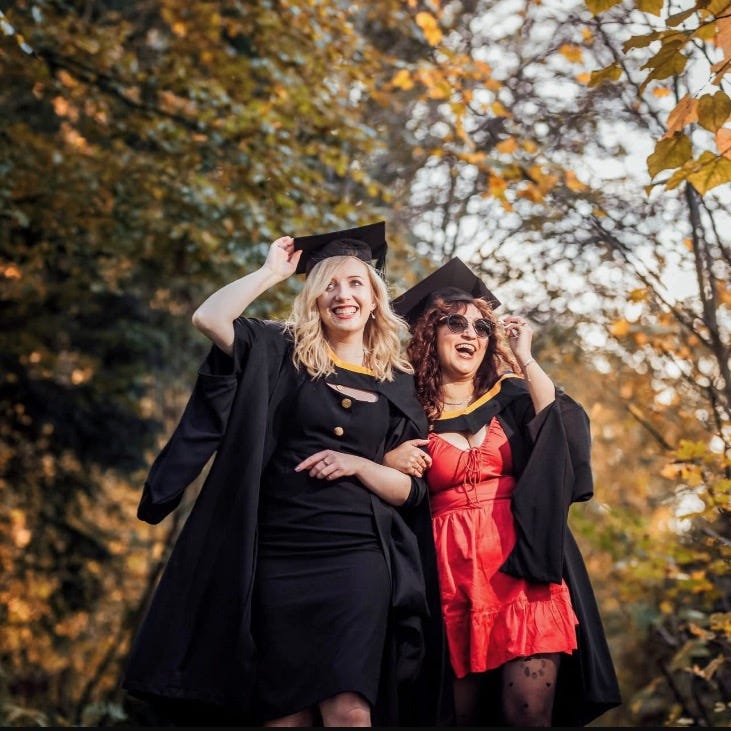
By the end of the second semester of my master’s, I realised I actually wanted to keep researching. Who would have thought that the student who once sat bored off her trolley in a sociology lecture would end up in academia?
Somehow, I had found my subject. A rigorous application process later, I landed a PhD on a fantastic project, leading to equal parts imposter syndrome and sheer excitement.
I’m deeply fortunate. Along the way, I met brilliant people who encouraged and influenced me, as well as family and friends who supported what at the time felt like an abrupt handbrake on a promising career, leaving me staring at what seemed like a blank drawing board.
I think a lot of what I’m doing has been right place, right time, but also underscored by working hard, albeit sometimes unconventionally (this post was written at 1.30am).
I’ve learned so much over the past year, particularly how much can change in just twelve months. While a year is a relatively short period of time, it can also completely transform your life. I’m hoping for similar borderline miracle-type progress as I start to shape my literature review (gulp).
Like most people, I took the scenic route, through writing, burnout, existential dread and many cups of tea, to find what feels like the right path.
I think it was the best route I could have taken.
Really inspiring story which I’m sure will stimulate others to follow their passion.